

Most people who can't sleep aren't missing a drug. They're missing the right combination of nervous system downregulation, cortisol reduction, and temperature cues that the brain needs to switch off. Natural sleep aids work by addressing those biological mechanisms directly, without the rebound insomnia or dependency risk that prescription sedatives carry.
This guide covers the 10 most effective natural sleep aids, what each one targets, how to use them correctly, and what to do right now if you're lying awake at 2am with a racing mind. It also covers sleep anxiety specifically, since it drives insomnia for a large proportion of adults and requires a different approach than generic sleep hygiene.
What Is Sleep Anxiety?
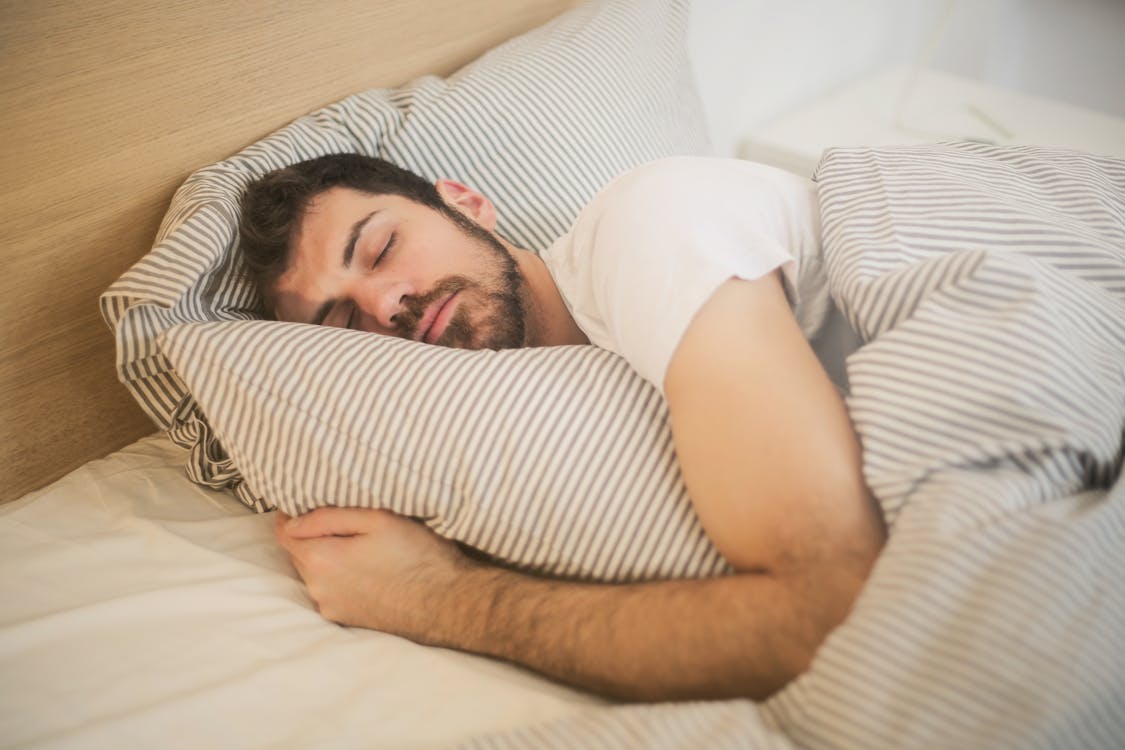
Sleep anxiety is the anticipatory fear of not being able to sleep. It differs from general nighttime anxiety in a specific way: the bed itself becomes the trigger. You feel fine at 9pm on the sofa, but the moment you lie down, your nervous system shifts to high alert. Heart rate rises. Thoughts accelerate. The act of trying to sleep generates the cortisol response that prevents it.
Sleep anxiety feels like a combination of hypervigilance, intrusive thoughts, and physical tension that appears specifically at bedtime or upon waking in the night. Your chest may feel tight. You monitor every sensation in your body. Time awareness sharpens — you track exactly how many hours remain until your alarm. Each of those responses is your sympathetic nervous system activating at the wrong moment.
People develop sleep anxiety through conditioned arousal: repeated nights of lying awake in bed train the brain to associate the bed with wakefulness and threat. Once that association forms, the bed itself becomes a stimulus that triggers the arousal response before you've even closed your eyes. The anxiety isn't irrational; it's a learned pattern your nervous system runs on autopilot.
When anxious thoughts accelerate at night, the 3-3-3 grounding method redirects attention to the present moment: name 3 things you can see, 3 sounds you can hear, and move 3 parts of your body. The technique works by shifting cognitive load from the prefrontal cortex's narrative loop (the source of anxious thoughts) to the sensory cortex. It doesn't resolve the underlying anxiety, but it interrupts the escalating thought spiral enough to lower cortisol and allow the sleep drive to take over.
10 Natural Sleep Aids That Work
The aids below fall into three categories depending on which part of the sleep problem they address: physiological (body chemistry and nervous system), behavioral (the patterns and associations that govern sleep), and environmental (the external conditions the brain needs). Start with whichever category matches your primary symptom.
Magnesium glycinate is the most effective form of magnesium for sleep. It supports GABA production (the main inhibitory neurotransmitter), relaxes smooth muscle, and the glycine component lowers core body temperature through peripheral vasodilation. Roughly half of adults are magnesium-deficient, and deficiency directly correlates with lighter, more fragmented sleep. This is the most foundational natural sleep supplement.
L-theanine is an amino acid found in green tea leaves that promotes alpha brain wave activity, the calm mental state between wakefulness and sleep. It targets cognitive hyperarousal specifically — the racing thoughts and inability to switch off that define sleep anxiety. Unlike GABA supplements (which don't cross the blood-brain barrier easily), L-theanine acts centrally and produces measurable alpha wave changes within 45 minutes.
Apigenin is a flavonoid found in chamomile that binds to benzodiazepine receptors in the brain at low affinity. It produces calming and mild sedation through the same GABA-A pathway that prescription sleep drugs use, without the receptor downregulation that causes tolerance and dependency. At 50mg, the effect is anxiolytic rather than sedative, meaning it reduces the cortisol load that blocks sleep without forcing unconsciousness.
Ashwagandha reduces cortisol by suppressing the hypothalamic-pituitary-adrenal (HPA) axis. It doesn't sedate directly; it removes the cortisol that blocks sleep. A 2019 study in Medicine found that participants taking 300mg of KSM-66 twice daily improved sleep quality scores by 72% compared to placebo over 10 weeks. The effect is cumulative: it builds over two to three weeks of consistent use rather than working immediately like a sedative.
Stimulus control is the single most effective behavioral intervention for chronic insomnia, with effect sizes larger than any single supplement. The rule is simple: use your bed only for sleep. No phones, no TV, no reading in bed, no lying awake for more than 20 minutes. When you can't sleep, get up. Sit in a chair under dim light until you feel sleepy, then return. You're extinguishing the conditioned arousal between bed and wakefulness. It works in two to four weeks with consistent application.
Unfinished tasks and unresolved concerns cycle in working memory as open loops. Writing tomorrow's specific task list offloads those loops externally. A 2018 polysomnographic study found that writing a detailed to-do list before bed reduced sleep onset latency more effectively than journaling about completed tasks. Close the notebook after writing — the physical act of closing it signals completion to your brain. Avoid writing about feelings or the day's events; the mechanism is offloading, not processing.
The physiological sigh is a breathing pattern your body uses naturally during stress — a double inhale through the nose followed by a long, slow exhale through the mouth. Research from Stanford's Huberman Lab (2023) found it reduces subjective anxiety faster than other breathing techniques, including box breathing and mindfulness. The long exhale activates the vagal brake, shifting the autonomic nervous system toward parasympathetic state within 1–2 cycles. Use it when thoughts accelerate at night.
Your brain needs core body temperature to drop 1–2°F to initiate sleep. A room that stays warm prevents that drop. Set your thermostat before your wind-down routine so the room reaches target temperature before you lie down. If you can't control the thermostat, a fan directed away from the bed improves air circulation. Cooling the room is the highest-leverage environmental change for sleep onset and costs nothing beyond adjusting a dial.
Your retinas contain melanopsin receptors that respond to light even through closed eyelids. Streetlights, standby LEDs, and digital clocks all suppress melatonin production. A 2022 study found that sleeping with 40 lux of ambient light (roughly a dim lamp in the hallway) elevated heart rate and reduced slow-wave sleep compared to complete darkness, even when subjects were unaware of the light. A $15 sleep mask eliminates this entirely regardless of your living situation.
A fixed wake time is the most powerful circadian regulator available without a prescription. Your suprachiasmatic nucleus (the brain's circadian clock) synchronizes to consistent light exposure and wake times. Varying wake time by more than 30 minutes shifts your circadian phase, delays melatonin onset the following night, and reduces sleep pressure. Hold your wake time seven days a week, including weekends. The effect compounds: each consistent day calibrates the clock more precisely.
Natural vs. Prescription: How They Compare
Prescription sleep drugs work primarily by enhancing GABA-A receptor activity (benzodiazepines, Z-drugs like zolpidem) or blocking histamine receptors (first-generation antihistamines). They work fast. But the same mechanism that makes them effective short-term creates tolerance within two to four weeks, reduces deep sleep quality, and causes rebound insomnia on discontinuation. Natural aids target the same downstream states — reduced cortisol, increased GABA, lower core temperature — through upstream mechanisms that don't trigger receptor desensitization.
| Sleep Aid | Works By | Time to Effect | Dependency Risk | Long-Term Use |
|---|---|---|---|---|
| Magnesium glycinate | GABA support, temperature drop | 55 min / 2–3 weeks full | None | Safe daily |
| L-theanine | Alpha brain waves, cognitive calm | 30–45 min | None | Safe daily |
| Apigenin | GABA-A (low affinity), anxiolytic | 30–60 min | None reported | Safe daily |
| Melatonin | Circadian phase shift | 30–60 min | None | Phase shift, not sedation |
| Diphenhydramine (Benadryl, ZzzQuil) | Histamine block | 20–30 min | Tolerance in 3–4 days | Not recommended |
| Zolpidem (Ambien) | GABA-A enhancement | 15–30 min | High — Rx only | Rebound insomnia |
| Benzodiazepines (Valium, Ativan) | GABA-A enhancement | 15–30 min | Very high — Rx only | Not safe long-term |

Natural Sleep Aid Effectiveness
What to Do When You Can't Sleep
Right now, if you're lying awake: the worst thing you can do is stay in bed and try harder. Effort generates cortisol. The brain interprets the effort to sleep as threat-level arousal, which activates the same response system that keeps you awake. You need to reduce the nervous system's activation level, not push through it.
- Get up after 20 minutes of waking. Don't lie in bed calculating how much sleep you'll get. The 20-minute rule exists because your brain starts consolidating wakefulness-bed associations after about that long. Get up, go to another room, sit in dim light.
- Do something quiet and non-stimulating. Read a physical book under warm-toned light. Avoid screens, emails, or anything that requires decision-making. You're waiting for sleep pressure to build, not killing time.
- Try 3–5 cycles of the physiological sigh. Double inhale through the nose, then a long slow exhale through the mouth. The extended exhale activates your vagal brake and shifts the nervous system toward parasympathetic state. This takes under two minutes.
- Return to bed only when you feel sleepy, not tired. Tiredness is systemic fatigue. Sleepiness is a specific physiological signal — heavy eyelids, slowed thinking, difficulty holding a thought. Return when you feel the second, not just the first.
- Don't check the clock. Clock-watching activates time-pressure thinking, which raises cortisol. Turn the clock face away. Your alarm is set; the remaining sleep time is not information you can act on.
No, for chronic insomnia. Staying in bed while awake strengthens the conditioned arousal that causes sleep anxiety. The exception is a single bad night during an otherwise normal sleep pattern — then staying quietly in bed with eyes closed is fine. But if you regularly lie awake for more than 20–30 minutes, get up every time. The short-term discomfort of stimulus control produces faster recovery than passive waiting.
How to Break the Sleep Anxiety Cycle
Sleep anxiety maintains itself through a self-reinforcing loop. Worry about sleep raises cortisol. Elevated cortisol prevents sleep. Failing to sleep confirms the worry. The next night, the worry arrives earlier and with more intensity. Within weeks, the bed becomes a conditioned trigger and sleep anxiety becomes structural rather than situational.
Breaking the cycle requires targeting two points simultaneously: the physiological load (cortisol, autonomic arousal) and the behavioral conditioning (bed-wakefulness association). Targeting only one is slower and often insufficient.
- Physiological target: Magnesium glycinate + L-theanine + apigenin taken 55 minutes before bed addresses cortisol load, GABA signaling, and alpha brain wave activity. This lowers the chemical barrier to sleep onset without producing sedation that interferes with the behavioral work.
- Behavioral target: Strict stimulus control (bed for sleep only) combined with a fixed wake time. The wake time prevents compensatory oversleeping that perpetuates circadian disruption. Stimulus control extinguishes the conditioned arousal.
- Cognitive target: The 3-3-3 grounding method at bedtime when anxiety activates. Pre-sleep task journaling to close the open loops that fuel nighttime rumination. These don't resolve anxiety, but they reduce its cognitive intensity enough for the other interventions to take hold.
Most people who apply all three consistently see a change in sleep onset within two weeks. The anxiety cycle doesn't disappear overnight; it weakens each time you fall asleep before the worry consolidates. Each successful sleep night reduces the arousal threshold for the next one.
The Natural Formula That Covers All Three
RestEase Sleep Powder combines magnesium glycinate (300mg), L-theanine (200mg), and apigenin (50mg) in a warm-water format taken 55 minutes before bed. The warm liquid adds a thermal wind-down cue alongside the compound effects — the same compensatory temperature drop mechanism used by the pre-bed shower. All three ingredients are at the doses used in peer-reviewed research, not symbolic amounts.
It's the cleanest way to handle the physiological side of the cycle. No melatonin means no morning grogginess or circadian disruption. No dependency risk means you can use it nightly without tolerance building. The behavioral work — stimulus control, wake time, journaling — you do alongside it.

-
Plant Based100% natural botanicals and adaptogens backed by sleep scientists.
-
Melatonin FreeZero melatonin. No dependency, no grogginess. Safe every night.
-
Lab Tested & Verified3rd party tested for heavy metals and purity. Label guaranteed.
-
Premium MagnesiumMagnesium Glycinate for deep muscle relaxation before bed.
Frequently Asked Questions
What is the best natural sleep aid to fall asleep?
What is the healthiest thing to take for sleep?
What can I safely take every night for sleep?
What is the best sleeping pill that is not addictive?
Why do people get sleep anxiety?
What is the strongest over-the-counter sleep aid?
How can I fall asleep right now?
What to do when your body won't let you sleep?
What is the best sleeping position for anxiety?
Should I stay up if I can't sleep, or try to sleep for just an hour?
Sources
- Abbasi B, et al. (2012). The effect of magnesium supplementation on primary insomnia in elderly. Journal of Research in Medical Sciences. PubMed
- Hidese S, et al. (2019). Effects of L-Theanine Administration on Stress-Related Symptoms and Cognitive Functions. Nutrients. PubMed
- Hieu TH, et al. (2019). Therapeutic efficacy and safety of chamomile for insomnia: A systematic review and meta-analysis. Phytotherapy Research. PubMed
- Langade D, et al. (2019). Efficacy and safety of Ashwagandha root extract in insomnia and anxiety. Medicine. PubMed
- Scullin MK, et al. (2018). The effects of bedtime writing on difficulty falling asleep. Journal of Experimental Psychology: General. PubMed
- Balban MY, et al. (2023). Brief structured respiration practices enhance mood and reduce physiological arousal. Cell Reports Medicine. PubMed
- Morin CM, et al. (2006). Psychological and behavioral treatment of insomnia. SLEEP. PubMed
- Mason IC, et al. (2022). Light exposure during sleep impairs cardiometabolic function. Current Biology. PubMed
- Haghayegh S, et al. (2019). Before-bedtime passive body heating by warm shower or bath to improve sleep. Sleep Medicine Reviews. PubMed
- Gray SL, et al. (2015). Cumulative use of strong anticholinergics and incident dementia. JAMA Internal Medicine. PubMed


